
"coffee from subtropics"
2000 article(s) found

What are the young leaves of a coffee tree like?
In 1884, Taiwan Province began to introduce coffee. At the beginning of the 20th century, overseas Chinese brought coffee back from Malaysia to grow in Hainan Province. Later, tropical and subtropical provinces in the south began to grow plant coffee one after another. Although the cultivation time is short, the coffee from Hainan and Yunnan provinces in China has excellent quality and unique charm, and enjoys a high reputation in the world. After some foreign businessmen buy it at a low price.

How long does it take for coffee trees to blossom to mature coffee berries?
How long does it take for coffee trees to bloom to mature coffee berries? coffee trees can only grow in the tropics and subtropics, and coffee trees can grow in different climates, soils, elevations and rainfall in the middle of the coffee belt. Coffee trees thrive in Africa's hot and humid canyons and forest rainforests, and it still produces high-quality coffee in cold, foggy, windy Central America.
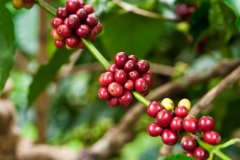
Guava Plain Manor, New Oriental region of Guatemala, Central and South American Coffee
Guatemala is one of the most important coffee producing countries in Central America, with long mountains and different regional climates, thus creating eight major coffee producing areas in Guatemala, all located on the highland topography of the subtropical climate, with abundant and stable rainfall and fertile volcanic ash soil is an excellent environment for coffee trees to grow. Plan del Guayabo is located next to the Volcn de Suchitn volcano.

Guatemala Antigua Coffee Estate Flavor Taste Introduction
Guatemala is located in the tropics. The northern and eastern coastal plain areas belong to tropical rain forest climate, while the southern mountainous areas belong to subtropical climate. There are two dry and wet seasons in a year. The wet season is from May to October, and the dry season is from November to April of the following year. The central plateau is also the cultural center of Guatemala, where temperatures are mild all year round at 1300 to 1800 meters, with daily temperatures ranging from 18 to 28 degrees Celsius, and higher in January

How do coffee beans grow?-the origin of Kopi Luwak
How do coffee beans grow-the origin of Kopi Luwak in the early 20th century, overseas Chinese brought coffee back from Malaysia to grow in Hainan Province. Later, tropical and subtropical provinces in the south began to grow plant coffee one after another. Although it has been cultivated for a short time, coffee from Hainan and Yunnan provinces in China has excellent quality and unique charm, and enjoys a high reputation in the world, and some foreign businessmen

How do Guatemalan coffee beans roast? what is the roasting degree of Guatemalan coffee beans?
Professional coffee knowledge exchange more coffee bean information Please pay attention to Coffee Workshop (Wechat official account cafe_style) the Guatemalan coffee beans in seven major coffee producing areas are all Arabica, all located in the highlands of the subtropical climate, with rich and stable rainfall and fertile pozzolanic soil, all parts of the country have natural environmental conditions that are very suitable for coffee cultivation. All production areas are supported.

The overall soft, slightly sour Salvador coffee estate introduction Renas estate
Savanna climate. Plain area belongs to tropical rain forest climate, mountain area belongs to subtropical forest climate. The annual average temperature is 25-28℃, the annual precipitation in mountainous areas is more than 1,800 mm, and that in coastal areas is about 1000 mm. May-October is the rainy season. Don't underestimate El Salvador's coffee production. In its heyday, it was the world's fourth-largest coffee producer, but decades of civil war nearly brought coffee down.

Indonesian Coffee Flavor and Taste Manor introduction to Indonesian Coffee characteristics Fuyin Manor Kopi Luwak
Across the north and south sides of the equator, Indonesia belongs to the tropical rain forest climate, which is controlled by the equatorial low pressure belt all the year round, prevailing updraft, high temperature and rainy all the year round, the main type of precipitation is convective rain, the annual average temperature is 25 ℃, Rain Water is abundant, with sufficient light, distributed in tropical rain forests, subtropical evergreen broad-leaved forests, mountain shrubs or hills, mountains, grasses, etc.

Processing of coffee fruit
Coffee is the fruit of a Rubiaceae plant growing about 6000 feet above sea level, distributed on the world's narrow subtropical axis; coffee trees grow green all the year round and can grow up to 20 feet tall, and are generally controlled at 8 to 10 feet for easy harvest. It takes three to five years for the coffee tree to bear fruit. First of all, it produces small white flowers that resemble jasmine in shape and size, and then wither and bear deep fruit.

Introduction to Antigua Coffee Latisa Chateau
Guatemala is located in the tropics, the northern and eastern coastal plains have a tropical rain forest climate, the southern mountains have a subtropical climate, the year is divided into two dry and wet seasons, with the wet season from May to October and the dry season from November to April of the following year. The central plateau is also the cultural center of Guatemala, where temperatures are mild all year round at an altitude of 1300 to 1800 meters, with daily temperatures between 18 and 28 ℃, and higher in January

Why does coffee taste sour? Why is the coffee you drink sour?
For information, please follow the coffee workshop (Wechat official account cafe_style) the word coffee coffee (Coffee) comes from a small town in Ethiopia called kaffa, and in Greek Kaweh means strength and enthusiasm. Tea, coffee and cocoa are called the three major drinks in the world. Coffee tree is a small evergreen tree of Rubiaceae, found in tropics and subtropics.

SL28 species treated with wine aroma of guava plain manor in Guatemala New Oriental region
Guatemala is one of the most important coffee producing countries in Central America, with long mountains and different regional climates, thus creating eight major coffee producing areas in Guatemala, all located on the highland topography of the subtropical climate, with abundant and stable rainfall and fertile volcanic ash soil is an excellent environment for coffee trees to grow. Plan del Guayabo is located next to the Volcn de Suchitn volcano.

Pineapple, apricot, peach, dried red wine flavor guava plain manor in Guatemala New Oriental region
Guatemala is one of the most important coffee producing countries in Central America, with long mountains and different regional climates, thus creating eight major coffee producing areas in Guatemala, all located on the highland topography of the subtropical climate, with abundant and stable rainfall and fertile volcanic ash soil is an excellent environment for coffee trees to grow. Plan del Guayabo is located next to the Volcn de Suchitn volcano.

What are the flavor characteristics of coffee beans in the Koban rainforest region of Guatemala? How do you classify the grades?
What are the flavor characteristics of coffee beans in the Koban rainforest region of Guatemala? How do you classify the grades? The coffee beans produced in Guatemala, which has seven major coffee producing areas, are all Arabica, all located on the highland topography of the subtropical climate, with rich and stable rainfall and fertile volcanic ash soil. as a result, all parts of the country have natural environmental conditions that are very suitable for coffee cultivation. Each producing area has a unique flavor.

Guava Plain Manor in Guatemala New Oriental region Liquor-scented Coffee treated by the Sun
Guatemala is one of the most important coffee producing countries in Central America, with long mountains and different regional climates, thus creating eight major coffee producing areas in Guatemala, all located on the highland topography of the subtropical climate, with abundant and stable rainfall and fertile volcanic ash soil is an excellent environment for coffee trees to grow. Plan del Guayabo is located next to the Volcn de Suchitn volcano.
The world's major coffee producing areas introduce the basic knowledge of fine coffee coffee beans represented by all continents
Coffee comes from coffee beans, which are harvested and processed from the fruit of trees. Coffee trees grow at the center of the equator, between latitudes of 25 degrees south and north, and are called the homes of tropical or subtropical countries called coffee belts. At present, there are about 60 coffee-producing countries. Coffee is produced in South America, Central America, the West Indies, Asia, Africa, Arabia, the South Pacific and

Introduction to the flavor and taste characteristics of El Salvador Himalayan coffee manor
Savanna climate. The plain area belongs to the tropical rain forest climate and the mountain area belongs to the subtropical forest climate. The average annual temperature is 25-28 ℃. The annual precipitation is more than 1800 mm in mountain areas and about 1000 mm in coastal areas. The rainy season is from May to October. Don't underestimate El Salvador's coffee production. In its heyday, it was the world's fourth largest coffee producer, but decades of civil war almost dragged down coffee

What are the advantages and disadvantages of coffee? how should I drink coffee?
What's coffee? The word Coffee comes from a small town in Ethiopia called kaffa. In Greek, Kaweh means strength and passion. Tea, coffee and cocoa are called the three major drinks in the world. Coffee tree is a small evergreen tree of Rubiaceae, native to Ethiopia. Small evergreen trees or shrubs of tropical and subtropical regions. Leaves long ovate, flowers
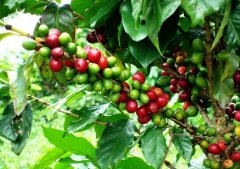
Cold-resistant single plant found in Yunnan coffee-- there is a new hope for cold-resistant breeding
The coffee producing area of Yunnan Province is mainly located in the tropical and subtropical area between the north of Indo-China Peninsula and the south of Yunnan Province, with a continental climate on the northern margin of the tropics.

Introduction to the method of describing the Flavor of El Salvador Himalayan Coffee Manor
Savanna climate. The plain area belongs to the tropical rain forest climate and the mountain area belongs to the subtropical forest climate. The average annual temperature is 25-28 ℃. The annual precipitation is more than 1800 mm in mountain areas and about 1000 mm in coastal areas. The rainy season is from May to October. Don't underestimate El Salvador's coffee production. In its heyday, it was the world's fourth largest coffee producer, but decades of civil war almost dragged down coffee